CS2 Economy Tips: Managing Money for Competitive Wins
Smartly managing your economy gives you a huge edge in your CS2 games. Here are some tips on how you can do that effectively.
Smartly managing your economy gives you a huge edge in your CS2 games. Here are some tips on how you can do that effectively.
As much as Counter-Strike 2 is about aim, game sense, and utility usage, it’s also a game about efficiency. Buying utilities, weapons, and armor on a whim might net you a win now and then, but it’s hard to succeed without the right economic plan. Every dollar counts, and the team that manages its money can often dictate the pace of the match.
There’s more to the economy than knowing when to save or buy; you need to read the game, predict your opponent’s financial state, and use that to your advantage. Here, we’ll be helping you understand how the economy works and how you can use concepts like force buys to net you more competitive wins.
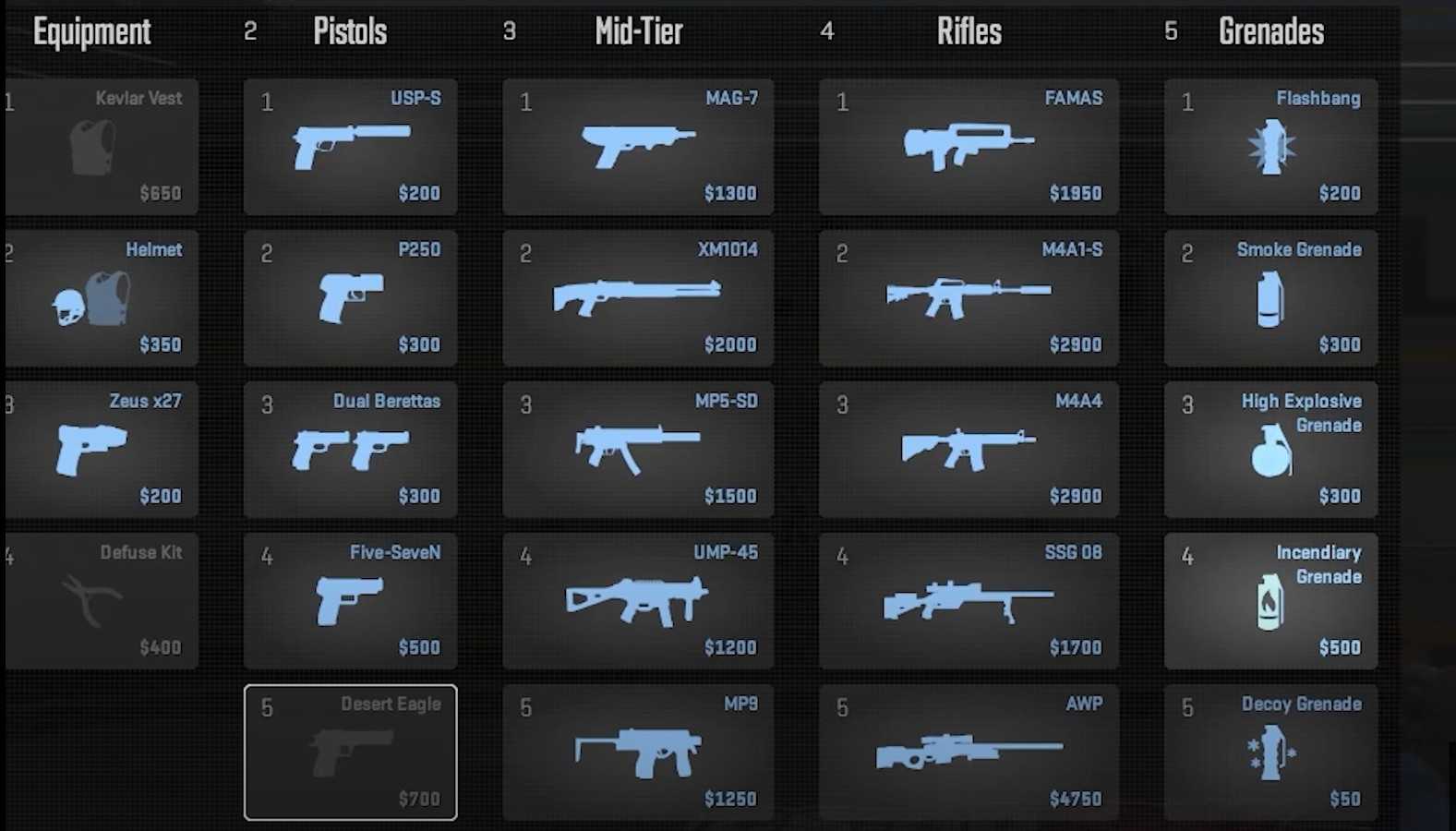
In the first round, you and your teammates spawn with a default pistol and $800 to purchase any additional items you need (in Casual, you receive $1000). Right away, you won’t be able to buy expensive items like sniper rifles, as they’ll be out of your budget. You’ll have to stick to cheaper pistols like the Deagle or CZ75-Auto.
Getting kills or winning rounds (or hopefully both) nets you more money. If you lose a round, you still earn money, but the value is significantly lower compared to the win bonuses. There are five ways a round plays out in a CS game:
All these outcomes will affect the Terrorists’ and Counter Terrorists’ economy differently.
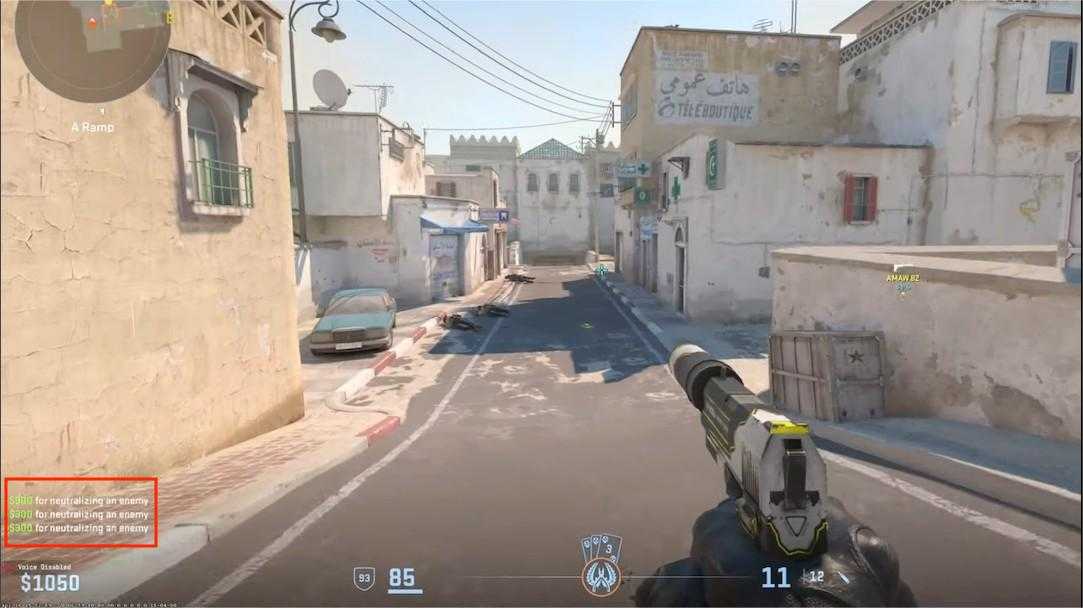
Other than the bonus earned for winning a round, there are other aspects to consider. For example, if CTs eliminate Terrorists, each CT player will earn money for their respective kills as well as the round bonus. If CTs defuse the bomb without killing all the players, the Terrorists will lose their guns but still gain $800 for planting the bomb. If the Terrorists managed their money properly, they would still be able to successfully rebuy essential items to turn the tide.
Finally, if the T-side manages to detonate the bomb without killing every CT, surviving CTs will enter the next round with the same weapons. It’s important to consider that the T-side will have more money because of the $3500 bonus from the bomb detonation.
In each round, the losers also get a loss bonus so that they are left with some money to work with. This is a lower amount than the winning side, and the loss bonus depends on your losing streak instead of the loss result.
Note: Terrorists receive an extra $800 for planting the bomb, regardless of whether it detonates.
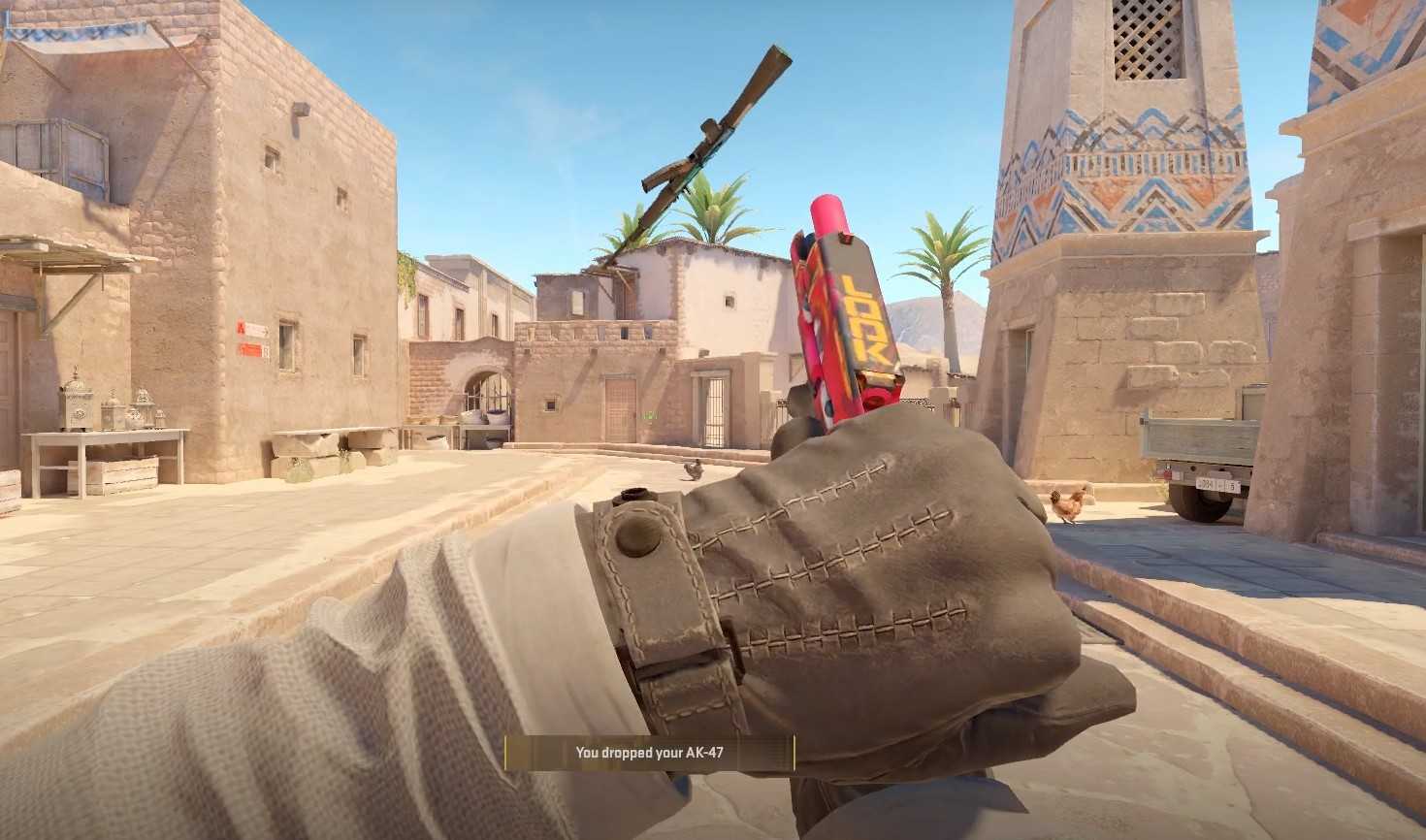
Let’s get into the meat and potatoes of this guide. Managing money in CS2 is about timing, prediction, and making the right sacrifices. A good player will plan their purchases to maximize their winning chances over the next several rounds, not just the current one. Here are some interesting strategies and when to use them:
Double Eco
If saving for one round isn’t enough for the full buy, you can commit to saving for two consecutive rounds. For example, if your team has around $2000 each after losing, saving twice can get you up to $5000 (or more) per player for a rifle, armor, and full utility buy. You will likely concede two rounds, but you can return on the third with the strongest buy.
Pistol + Armor (Half Buy)
Instead of a full save, you can invest in a cheap pistol like the P250 ($300) or Deagle ($700) with Kevlar ($650 without helmet, $1,000 with). You can also add a smoke or flashbang for site entry or defense. If your team averages around $2800 each, a half buy will let you contest the round while saving enough for a $4500 full buy in the next one. This strategy works best if you can set up close-range fights (stacking B site on Inferno or playing tight angles on Mirage A ramp).
Bonus Round
If you manage to win with SMGs or weaker weapons, consider keeping them instead of directly jumping to rifles. Holding onto SMGs into Round 3 if you already won with them in Round 2 means you can still buy rifles in Round 4 if you lose. This works well on maps like Nuke, where you can use SMGs to win close fights around the Hut and Ramp. All without risking the long-term economy.
Economic Reset
This is a highly risky yet clever strategy. When an enemy team builds up a high loss bonus, they will afford consistent buys after multiple defeats. If the enemy team breaks their loss streak by winning the current round, their next loss will reset them back to the $1400 loss bonus.
This mechanic can be easily abused. When a team finally wins after a long drought, chances are they’ll dump all their saved cash into a full buy to keep winning. If you take them down in the round where they fully buy, they’ll be broke again. To force an economic reset, prioritize aggressive, high-pressure plays to try and force the reset immediately.
Stacking Economy
A lot of the time, the best option is to save for multiple rounds before going all-in. For example, if you lose the first two rounds on T-side Nuke, your team might stack outside and go for exit kills in round, keeping the cash for a max-buy in round 4. This guarantees rifles, armor, and full utilities rather than relying on partial buys.
AWP Economy Management
The AWP is a highly rewarding weapon in CS2, but expensive to keep in rotation. If your AWPer goes down holding a site, the nearest teammates should grab and save it. Sometimes, you might have to do this even if it means hiding for the rest of the round to save. This means your teammate won’t have to spend $4,750 in the next buy, freeing up cash for extra kit.
Hero Buy
One or two teammates can fully invest in a powerful weapon (usually an AWP or rifle) while the rest of the team runs pistols or SMGs. This can increase your win potential without tanking the team’s economy. This enables plays like the following: your AWPer goes glass canon (AWP, no armor) to hold Mid, while the rest stack A or B site with pistols.
By now, you have a lot of information to digest and apply in the game. You won’t be able to apply every concept right away, so keep note of what you have been doing wrong and start by improving on that end first. Every small decision, like dropping a rifle to a teammate or picking up a free gun, can snowball into game-changing advantages. Treat each dollar as a resource to be invested, and you’ll notice it’s easier to maintain momentum and handle pressure.