CS2: Is Skin Trading Worth It In 2025?
Is the CS2 skin trading game the same as it was in the golden times? Is it worth getting into skin trading in 2025? Here is everything you need to know.
Is the CS2 skin trading game the same as it was in the golden times? Is it worth getting into skin trading in 2025? Here is everything you need to know.
The Counter-Strike 2 skin market reads like a different game altogether in 2025. Not so long ago, skin trading was a relatively predictable game of rarity, float, and a bit of hype that drove the value. Looking around today? The trading scene is as tense as a clutch round.
If you’re wondering whether skin trading is still worth it, the short answer is that it’s still active — but the rules changed overnight. The risks are bigger, the market moves fast, and those who stand by get swallowed by the volatile market.
In the early days, the skin market followed a fairly stable arc. You opened cases, crossed your fingers for something rare. If you managed to open a decent skin, you knew you could sell it fast. Expensive generally meant liquid, and the rarest of them, including knives, gloves, and high-tier covert items, were the crown jewels of the CS2 market.
Sure, their prices didn’t move fast, and the liquidity was limited, but their rarity was what supported those ridiculous price tags. Many of the trading veterans treated skins like a sort of investment — they would watch trends, track the market, be updated on all the hype, and basically try to buy low, sell high.
Previous rarity dynamics don’t hold the same weight as before. The new update rolled out on 23 October 2025, bringing contracts that allow players to trade up five Covert skins for knives or gloves.
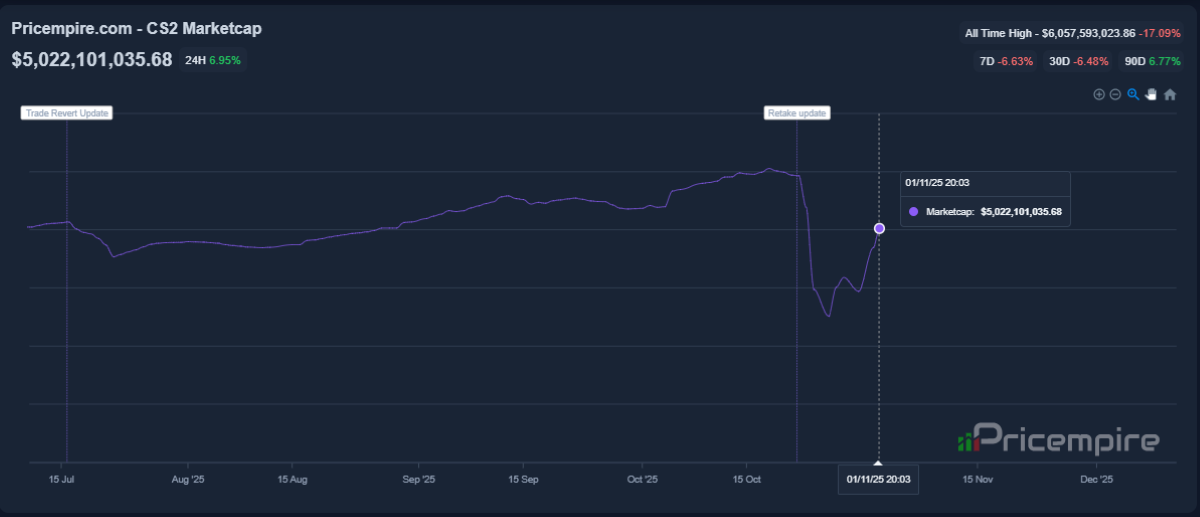
Image Credit: Pricempire
Activity and attention spiked following the recent trade-up patch. Market trackers show just how massive the numbers have grown across Steam. The estimated market cap plummeted from ~$6 billion to ~$3.5 billion according to Pricempire.
Those aren't rookie numbers. While the market initially crashed, it has recovered to nearly $5 billion as of early November. It might seem like the dust has settled, but there’s still uncertainty for the future.
The community reaction was panic at its core. As a result, knives and gloves, which used to be extremely rare and highly valued pre-patch, had their market values crash up to 50%. This was expected because of the potential supply increase.
Not everyone was grieving over their collections, though. Many of the players were celebrating the suddenly affordable knives as inventories flooded.
Meanwhile, Covert skins, which used to be the entry-level towards high-end trading, saw sharp increases in value. Mainly because they offered a completely new pathway towards higher-rarity skins.
What used to be a more closed and inaccessible market for most has become more accessible. More people can obtain higher-tier rare skins, but that also kills the high-end rarity and 6-figure price tags that once were the epitome of CS2 trading.
At the same time, for a lot of traders, the old sense of rarity and value model is gone, and they’re left scrambling to figure out what comes next. On the bright side, this also opens up the gates for new traders, offering lower entry points than before.
Because of these changes, trading skins isn’t the same game anymore. Here are a few things to note before you strategize trading skins in 2025:
There are more ways than ever to obtain premium items like knives and gloves today. That means their rarity and value take a hit, driving down value. The update also preserved StatTrak counts on eligible trade-ups, protecting value on certain skins.
Covert skins are now key ingredients for trade-ups, following a massive increase in their demand. What were once somewhat middling skins are some of the most valuable ones now.
Considering the volatility following huge swings all over the place, and with a flood of high-tier skins popping up in the marketplace. It’s expected to take some time for the market to stabilize and present price clarity.
Retail traders and the community still matter. People will always want skins that look cool, and community interest still affects value. But when a major update changes how skins work and trade, the sentiment can flip in an instant. Serious traders track that community sentiment just as closely as the numbers.
One update, and the whole CS2 economy shook up overnight. Many believe that Valve’s goal was to balance the economy and pave the way for new traders as well. Expensive golds that were rarely seen on the Steam market before are more accessible now. Creating for wider market discovery and activity.
The update introduced a reliable pathway to obtaining knives and gloves, aligning with Valve’s efforts to shift away from its core luck-based drops.
CS2 trading market has changed drastically, and the days when you could just stash away a rare skin and watch it rise in value are far gone. The recent trade-up update has restructured the trading model. Any volatile market brings its own risks, and what was once considered a reliable investment may be considered a risky gamble today.
High-tier items like knives and gloves don’t automatically hold their value anymore just because they were rare pre-patch. The real action is happening around covert skins; their value is surging fast and shaping the way for a new market dynamic.
So, if you’re in the scene, the takeaway is that the old playbook is outdated. Now, you have to be more aware than ever, keep track of community sentiment, trading mechanics, and liquidity altogether.
Skin trading is still alive in CS2, but it’s hardly a safe ride anymore. Hold your reins tight and don’t expect it to sit still. Good luck.