Old School RuneScape’s Newest Skill: Sailing Explained
We dive into OSRS to help you understand the new Sailing skill and everything that it means for you!
We dive into OSRS to help you understand the new Sailing skill and everything that it means for you!
For more than a decade, Old School RuneScape lived under a constraint its developers at Jagex chose for themselves. When the game launched in 2013, it was framed as preservation rather than progression. Players wanted a return to an older RuneScape, one defined by friction, slow mastery, and a clear separation between effort and reward. The skill list became a symbol of that promise. Skills were cultural artifacts, tied to memory, identity, and trust.
Over time, Old School RuneScape expanded slowly in nearly every direction… except for one. New quests rewove the lore. Bosses pushed combat mechanics forward. Entire regions were added to the map. Existing skills were stretched sideways through new methods and rewards. What never changed was the number of skills themselves. The unspoken rule was simple. Jagex could deepen the game, but they could not redefine its foundation.
Sailing challenges that rule.
The idea of a new skill had surfaced before and been rejected just as firmly. Many players feared that adding a skill would open the door to power creep, bloat, or a gradual slide away from what made Old School distinct. The resistance was not reactionary. It was protective. Old School RuneScape survived because it did not chase novelty for novelty’s sake.
That context makes Sailing’s approval so significant. It was not waved through on excitement alone. It survived extensive polling, redesign, and scrutiny because it made a specific promise. Sailing would not shortcut progression. It would not trivialize existing content. It would feel like Old School RuneScape, even as it did something the game had never done before.
This is why Sailing matters beyond its mechanics. It represents a recalibration of trust between players and developers. The community did not suddenly decide that new skills were fine. It decided that this skill, built deliberately and transparently, earned the right to exist.
In that sense, Sailing is less a break from Old School tradition than a test of it. If a new skill could be added without eroding the game’s identity, then Old School RuneScape could finally grow forward instead of only outward. Sailing, as a new skill, represents Jagex’s commitment to the spirit and design philosophy of Old School more so than the preservation of its origin.
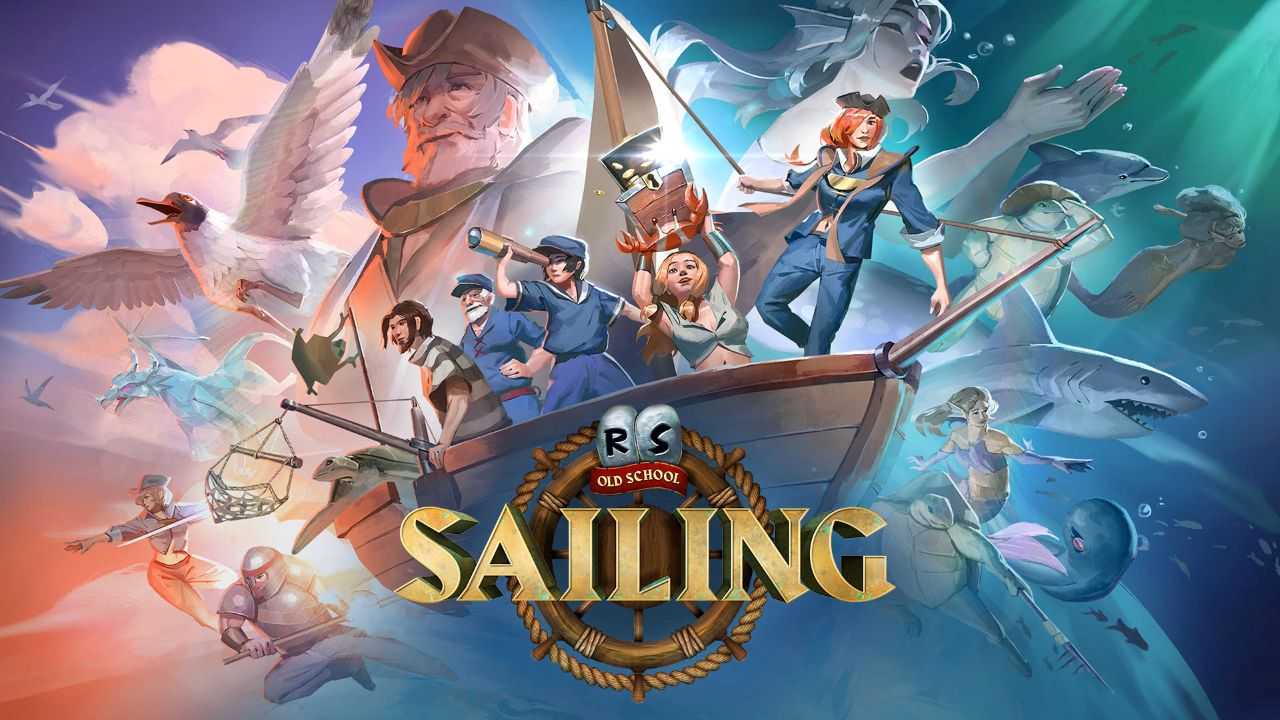
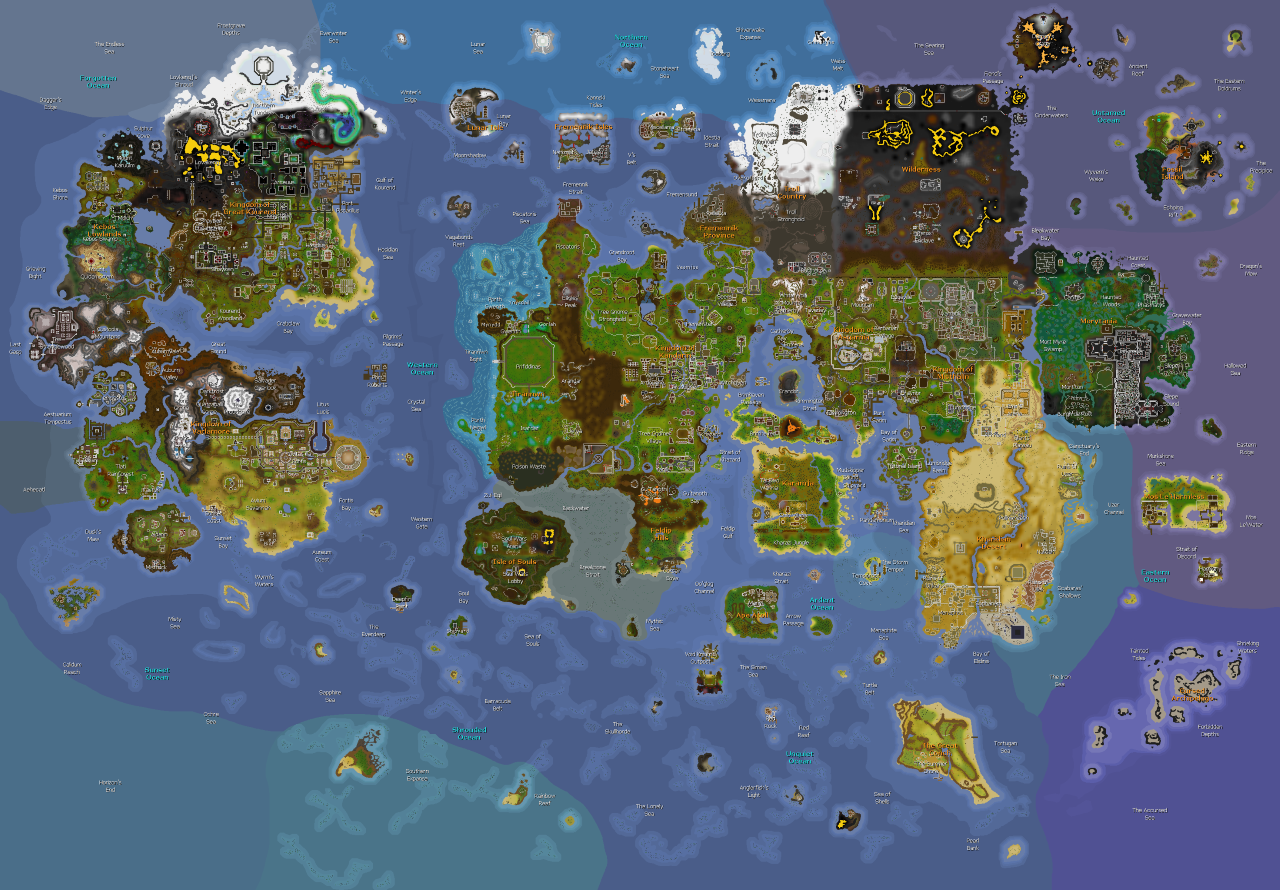
Before Sailing, the ocean in Old School RuneScape was not a place at all. It was an absence. Water existed to separate landmasses, frame coastlines, and justify teleportation. Boats were a cutscened means-to-an-end. You clicked, waited briefly, and arrived somewhere else. The sea itself was never meant to be engaged with. Until now.
Sailing reverses that abstraction entirely. The ocean becomes a physical, navigable space governed by game rules rather than menus. Movement takes time, energy, resources! Environmental conditions affect success or failure. What was once connective tissue of Gielinor becomes content rife for grinding and enjoying.
This shift has far-reaching consequences for how the world feels. Coastal waters act as an onboarding space, forgiving and predictable, with gentle winds and minimal threats. These regions exist to teach players how ships respond to movement and how hazards are communicated visually. As players venture farther from shore, the sea’s dangers become greater. Currents push ships off course. Storms damage hulls and force difficult decisions. Hostile encounters become more frequent and less avoidable. All of this creates an environment for RuneScape that feels fresh, dangerous, and interesting.
However, these new dangers are not framed as hard level gates. Instead, they function as soft checks on preparation and awareness; something seasoned RuneScape players now and in 2006 both understand. A skilled, prepared player in a modest ship can outperform an inattentive player in a heavily upgraded one. Knowledge becomes as valuable as stats.
This design solves a long-standing spatial problem for Old School RuneScape. Gielinor’s landmass is dense. Every new island or dungeon added to the map risks crowding existing content. RuneScape bests World of Warcraft in its simplicity and its unwillingness to complicate the player experience. The ocean, by contrast, offers near-limitless room to expand without compression. New encounters, resources, and challenges can be layered into the sea without displacing anything that came before.
Just as importantly, Sailing restores exploration as a meaningful activity. The fastest route is not always the safest. The safest route is not always the most efficient. Players must read the environment, adapt to conditions, and decide when to push forward or turn back. In a game increasingly optimized around efficiency spreadsheets, that uncertainty feels almost radical.
By turning a loading screen into a world, Sailing does more than add space. It adds texture. The ocean is no longer something you skip. It is something you learn.
At the heart of Sailing is the ship itself. Unlike mounts or vehicles in other games, ships in Old School RuneScape are not cosmetic flourishes. They are functional equipment. Your vessel determines what content you can access, how efficiently you can engage with it, and how much risk you can afford to take.
Progression in Sailing is inseparable from ship progression. Like armor or weapon progression for your combat skills, as your Sailing level increases, you in turn gain access to new hulls, additional component slots, and specialized facilities. These are your tools for progression on RuneScape’s high seas. At higher levels, players can own up to five ships at once, allowing them to build vessels for specific purposes rather than constantly reconfiguring a single boat.
Ships fall into three broad categories, each with a distinct role.
Rafts serve as the introduction. Yes, they are slow, fragile, and barely customizable, but they teach the fundamentals of navigation, docking, and environmental awareness. Rafts are used primarily during the introductory quest and for accessing narrow or shallow charting locations that larger ships cannot reach. While quickly outclassed, rafts teach a player how to get their sealegs.
Skiffs, unlocked at level 15, are the first obvious leap forward for sailing progression. Faster and more responsive, skiffs are ideal for early Barracuda Trials and mid-level charting. They can carry up to five additional players, making them perfect for small group activities or group Iron Man challenges. A modestly upgraded skiff is capable of handling a surprising amount of content, especially for players focused on exploration rather than combat.
Sloops, unlocked at level 50, form the backbone of high-level Sailing. They boast the highest hit points, the most facility slots, and access to the most dangerous waters. Sloops can carry up to a whopping ten additional players and are the preferred choice for combat-heavy activities, deep-sea salvaging, and advanced port tasks. For most players, a well-planned sloop becomes a long-term investment rather than a temporary stepping stone.
What distinguishes Sailing from other progression systems is how ships are built. Ships are modular. You’re not just choosing a combat style, you’re truly customizing. Hulls determine factors like speed and durability. Sails and masts likewise control acceleration and wind efficiency. The helm governs which sea-areas you can safely enter. The keel provides armor and defensive bonuses. Each component matters contributes to the customization ecosystem.
Facilities push this system further. Cannons enable naval combat. Salvaging hooks allow shipwreck harvesting. Choosing facilities is all about enabling your ship to do what you need it to do. Grinding or progressing in the order that you want to is OSRS in a nutshell.
This is where many players encounter their first real test. Old School RuneScape has trained its audience to chase upgrades the moment they become available. Sailing challenges that instinct. An expensive ship built without intention often performs worse than a cheaper vessel designed to grind efficiently. Knowing when to, and more importantly, when not to upgrade facilities can be make-or-break.
By treating ships as gear rather than cosmetics, Sailing reinforces a familiar Old School lesson: Power, in Old School, isn’t strictly the number on your skills. Instead, prowess in Runescape comes down to how well you know the design dynamics of the world of Gielinor.
One of the most consistent patterns in Old School RuneScape is the instinct to upgrade as soon as possible. New tiers unlock, XP numbers go up, and players assume progress follows automatically, as though they’re back to levelling their Mining. Sailing deliberately pushes against that instinct. In doing so, it exposes a subtle trap that catches even experienced players.
Ships are expensive. Components require materials, gold, and often time-intensive preparation (or studying, like you’re doing now!). On paper, upgrading a hull or sail the moment it becomes available feels efficient. In practice, many of these upgrades offer marginal improvements that only matter in specific contexts. A slightly faster hull does little if your route selection is poor. A sturdier keel does not help if you are sailing into hazards your helm cannot manage.
Sailing rewards intentional builds over maximal ones. A player who understands which facilities unlock new activities will progress faster than one who chases raw stats. This is especially true in the mid-game, where the temptation to over-invest can slow overall progression.
There is also a psychological component at play. Old School RuneScape has trained players to view gear upgrades as milestones. Sailing reframes that relationship. Upgrades are tools, not achievements. Installing a new facility or component should answer a specific question: what content does this allow me to do that I could not do before?
Players who learn to ask that question early save enormous amounts of gold and frustration later on.
Early Sailing is intentionally narrow. Your options are limited, your ship is fragile, and the ocean feels larger than it does later on. This is not accidental. Here and now, you’ll learn the language of sailing before efficiency should ever cross your mind.
Port tasks form the backbone of early progression—start there. Courier tasks ask you to move cargo to-and-from ports, reinforcing docking mechanics and route planning. These tasks are forgiving, and low-risk while you’re learning the best routes on the oceans. Remember learning the route between Lumbridge and Falador? Imagine you’re there again, but on the high seas. Bounty tasks introduce light combat encounters and slightly higher experience rates, but they remain secondary at this stage, as they’re higher risk and less rewarding on average as a result.
Your first foray into sea charting can complement port tasks naturally. Early oceans are designed to be approachable, with clear landmarks and minimal hazards. Charting rewards curiosity rather than repetition, turning RuneScape into a truly open world, a la The Legend of Zelda: Wind Waker. Each new point of interest on the ocean teaches players how the ocean communicates danger through design.
Shipwreck salvaging rounds out early training. While slower than other methods, it provides relaxed experience and introduces the systems that later become core to AFK training. Salvaging also begins the process of acquiring the Sailor’s Amulet, a utility item that pays dividends later in the skill.
At this stage, efficiency matters less than comprehension. Players who rush early Sailing often find themselves backtracking later to relearn mechanics they skipped. The ocean is patient, but it does not forget mistakes.
Once skiffs are unlocked, Sailing gets quicker. Your speed increases, your quest routes double in distance, and the ocean begins to test players rather than instruct them. This is where Sailing shifts from tutorial to expression. In other words, this is Jagex pulling the training wheels away.
Barracuda Trials become a defining feature of mid-level progression. These timed courses reward precise steering, efficient sail management, and route memorization. Barracuda Trials become unlike all other OSRS tasks, offering some of the strongest experience rates available in this bracket, but only for players willing to engage mechanically. Running with a small error is punishing—finishing a trial clean is rewarded greatly.
Barracuda Trials also function as an honest gate, or skill assessment tool. If a course feels punishing, the solution is often not repetition, but preparation. If you’re having trouble, returning with improved components is often the way to go.
Alongside speed increases and difficulty spikes, in the mid-level, charting grows more complex as well. Storms, reefs, and hostile encounters introduce totally new dangers to avoid. However, completing full charts in these regions offers excellent experience relative to time invested, if you’re feeling brave
By this point, players skilling Sailing should begin to define their Sailing identity. Some mid-level sailors may lean into exploring the high seas of Gielinor, prioritizing chart completion and discovery bonuses. Others may instead focus on task efficiency, chaining port assignments together with mastery. Still others pursue Barracuda Trials aggressively, chasing mechanical mastery.
None of these paths is strictly superior. The design of Sailing supports divergence in skilling methods, and that flexibility is one of its quiet strengths. The skill does not force players into a single “most-optimal” method. Sailing instead asks them to choose how they want to engage with the ocean, then rewards commitment to that choice.
At level 40, Sailing introduces a system that quietly reshapes how the skill fits into a player’s broader account progression. Crew mates are not simply helpers. They represent a philosophical shift in how Old School RuneScape allows skills to occupy a player’s time.
Crew mates can be hired to assist with ship operations, each bringing proficiencies in Helmsmanship, Privateering, and Deck Handiness. These stats affect how effectively they steer, fight, salvage, and repair while aboard your ship. Once assigned to your vessel, crew mates can perform certain tasks without you, allowing your ship to function with reduced direct input.
While the labor trade-off is deliberately enticing, actions performed by crew mates grant only half experience. This prevents passive play from eclipsing active methods, but it still provides meaningful progress over time for those who prefer a more AFK approach. The choice becomes strategic rather than binary. Do you want maximum experience per hour right now, or steady progress while you focus on other goals?
This matters more than it first appears. Old School RuneScape has changed alongside its audience. Because it’s 2026 and not 2006, many players now balance skilling with work, family, or, optimistically, long-term account projects. Despite the loss of XP, the design of the crew mates system acknowledges that “AFK-friendly” reality without compromising the game’s values. Progress still requires investment, but not constant attention.
If played right, having crew mates also encourages long-term quest planning. A well-staffed ship can salvage continuously during extended sessions, gather resources while you chart or manage inventory, and reduce the downtime caused by repairs. In other words, Sailing, with crew mates, can become a skill that runs alongside your account goals rather than competing with them.
In this sense, Sailing joins Farming as one of the few skills that rewards a modicum of patience over all-out intensity. Sailing is about choosing when to be hands-on and when to let preparation carry you forward; or, if you’re a fan of this guide, taking a little bit of passive strategy into your active missions.
Reaching level 50 marks a turning point. With access to sloops, Sailing stops feeling like a sequence of unlocks and starts feeling like a lifestyle skill. Your ship is no longer simply a vehicle for quests previously unreachable, it is now a mobile base capable of supporting multiple XP grinding activities at once, so basically this is an OSRS player’s dream.
Deep sea trawling exemplifies this shift. By combining Sailing and Fishing through ship-mounted nets, players gain access to new fish types (like the haddock, yellowfin, and marlin) that offer both profit and utility. Experience rates are steady rather than explosive, but the appeal lies in consistency. For Ironmen especially, deep sea trolling provides a reliable source of resources that integrate cleanly into broader progression.
High-tier port bounties push the opposite direction. These tasks involve hunting powerful sea monsters or engaging hostile ships in dangerous waters. Preparation thusly becomes paramount. In this tier of skilling, ammunition quality, facility choice, and crew composition all matter. Mistakes are costly, but success is rewarded with strong experience and valuable drops.
AFK salvaging rounds out high-level training. With a sloop outfitted with two salvaging hooks and a salvage station, shipwreck salvaging becomes one of the most relaxed methods available. Input is minimal, experience is steady, and profit scales with level. This method appeals to players who prefer long sessions without constant focus.
What unites these methods is choice. Sailing offers multiple viable ways to engage, each emphasizing a different relationship with time, attention, and risk.
This flexibility of skilling methods is rare in Old School RuneScape. Most skills eventually collapse into one dominant method. Sailing resists that collapse by tying efficiency to preparation rather than repetition.
If you, reader, are like me, you may find many of these OSRS guides unhelpful as a dedicated Ironman player. Often, advice is conflicting or relies on your use of non-Ironman avenues. Fear not; I do not believe this guide falls into that trap. However, sailing does take on a different context for Ironmen.
With Ironmen, Sailing feels less like optional content and more like infrastructure. Many of its systems address long-standing friction points that Ironman accounts have learned to tolerate rather than enjoy.
In the Sailing world, new travel routes reduce at least some reliance on teleport-heavy planning. Salvaging provides a steady stream of materials without requiring convoluted setups. Sea-exclusive drops and resources fill gaps that previously demanded awkward detours or inefficient grinds.
Because Sailing interacts naturally with multiple production skills, its value compounds over time. Construction benefits from diversified materials. Fishing gains new methods that scale cleanly. There was clearly love put into the inter-designed mechanics of Sailing.
Perhaps most importantly, Sailing rewards early engagement. Ironmen who invest time into the skill before reaching the late game often find that other progression paths smooth out as a result. The ocean becomes a connective layer rather than a side activity.
This sense of intentionality is what sets Sailing apart. It does not feel like content added after the fact to accommodate Ironmen. It feels like a system designed with self-sufficiency in mind from the beginning.
With all of this in mind, never forget that the OSRS wiki is your greatest friend as an Ironman.
To understand why Sailing matters, it helps to remember what skilling has always meant in RuneScape. Skills were never just progression bars. They were identity markers. Saying you were a miner, a fisher, a crafter, or a slayer meant something because those choices shaped how you spent your time in the world. Skilling was not a side activity to combat. It was a parallel way of existing in the game.
Over time, many MMOs drifted away from that idea. Skills became conveniences, shortcuts, or passive bonuses that existed to support endgame combat loops. RuneScape resisted that shift longer than most, and Old School RuneScape preserved it deliberately. Skilling stayed slow. It stayed sometimes inefficient. It stayed meaningful because it asked players to commit.
Sailing fits into that lineage precisely because it isn’t frictionless. It asks players to learn systems, to prepare properly, and to accept that progress will not always be immediate. Ships must be built with intent. Routes must be chosen with care. The ocean rewards understanding far more than raw persistence.
Sailing reaffirms what a RuneScape skill is allowed to be. It is expansive without being overwhelming. It connects to other systems without replacing them. It creates new spaces in Gielinor to explore without invalidating the old ones we know and love. Most importantly, it respects the idea that mastery comes from familiarity rather than shortcuts.
That respect matters at a time when the broader MMO genre is struggling to hold players’ attention. Many long-running online games have seen populations decline as content cycles accelerate and systems flatten into sameness. Old School RuneScape has moved in the opposite direction. While the OSRS playerbase has grown steadily, it has not been because it chases trends, but because the game deepens what it already does well.
Sailing is a clear expression of that design philosophy; growth over exploitation. Instead of simplifying the game to attract new players, it expands the world in a way that invites curiosity. Jagex clearly serves dedicated, loyal, interested players with a craving for new ways to enjoy the thing they know and love. They have added another layer of gameplay where patience and planning pay off.
In historical terms, Sailing will likely be remembered as the moment Old School RuneScape proved it could move forward without losing its past. Sailing shows that an old dog can learn new tricks.
In a genre crowded with games chasing novelty and engagement, Old School RuneScape continues to be an MMO that grows by doing something rarer: trusting its players. Sailing rewards that trust by giving them an ocean worth learning.