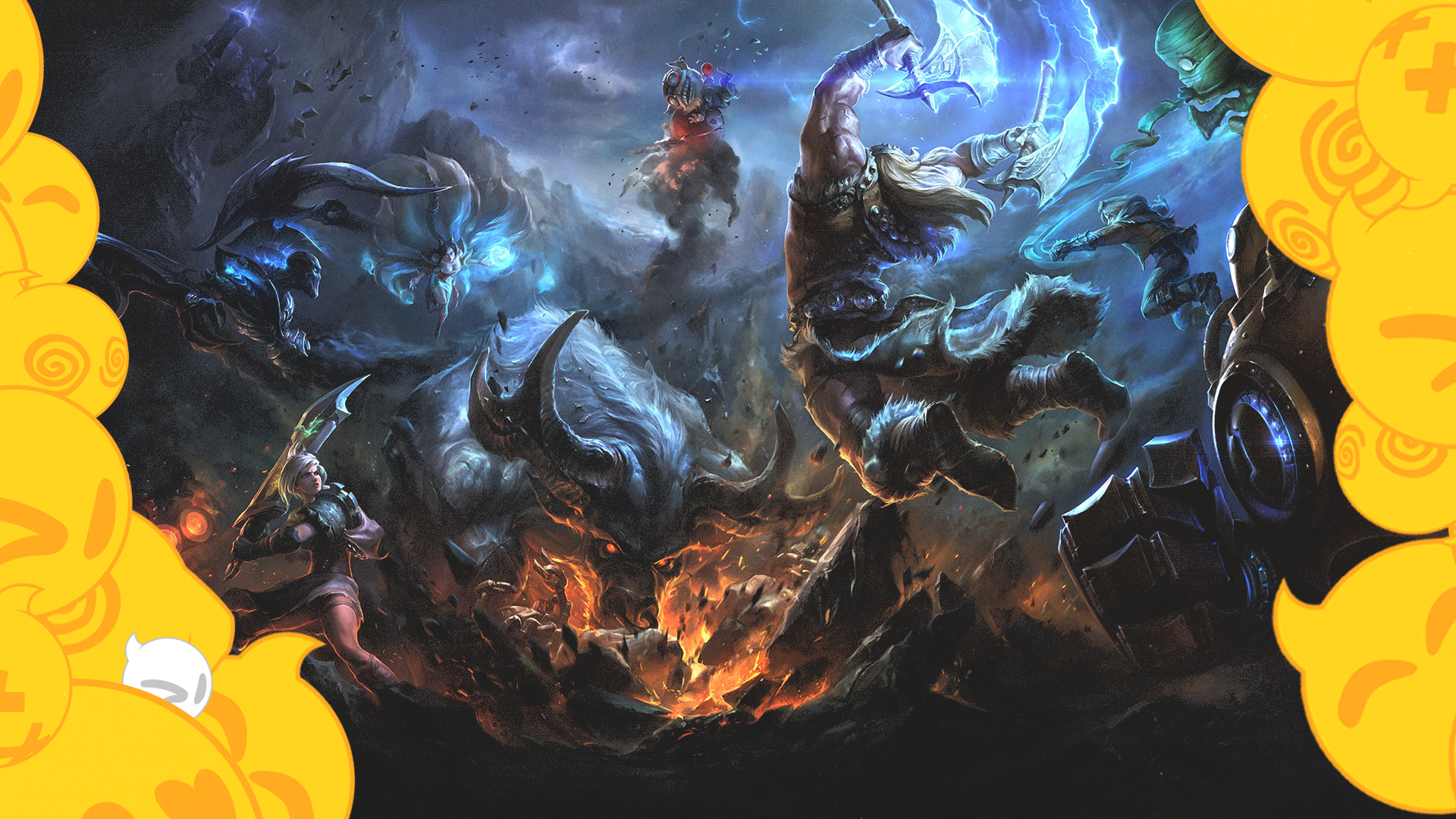
I remember first playing League of Legends back in August of 2014, around the time when Gnar was being released. Now 11 years later, I still find appreciation and love for the game, having played hundreds of hours of solo queue and improving each year. I’ve climbed through all the ranks up to Masters and have experienced almost every single meta this game has ever been through. This article will focus on the things I wish I knew when I first started playing this game and what types of knowledge and skills I’ve picked up over the years.
Mentality
As a young player, I had a completely different approach to League than I do now. I thought my teammates were holding me back and that typing to my teammates would make them play better. I got tilted after one bad play and let it affect not only the game but my entire mental state for the next one. The truth is the only player you can control is yourself and there’s no point in stressing over things out of your control. The best way to approach a game of League is to focus on what you can control and to not tilt over what your teammates do.
Typing, spam pinging, and raging will do nothing positive for the game and won’t result in wins. If you have a hard loss, instead of quickly re-queuing for a game, take a break and reset your mental state. Playing tilted will negatively affect your chances of climbing and that mindset will carry into future games as well. I believe 50% of winning in this game is your mentality, and people severely underestimate the benefits of not playing tilted and always staying positive.
Results Based Versus Behavioral Based Improvement
I remember first playing ranked and only focusing on the wins and losses. If I won a game, it was because I played well and if I lost it was because I didn’t. Having a results-based approach to improving at this game is one of the least effective ways to climb because it focuses on all the wrong things. The performance of a player should always be on the behaviors and decisions that were made during the game. Did you kite camps properly, did you contest objectives when you shouldn’t have, did you forget to use a key ability during a Dragon fight?
Regardless of win or loss, if you perform well every game you will statistically climb. I live by the 60-20-20 rule which essentially says that 20% of your games are losses and out of your control, 20% of your games are auto win because your teammates perform, and 60% of games are up to the individual. If you play extremely well and just happen to lose, understand that not every game is in your control and as long as you’re consistent and have a strong mentality every game, you will win more than lose.
Self Identity (Role and Champions)
Self identity essentially means understanding what role and Champions you want to focus on in order to climb. When I first played ranked, I was playing every single role and playing whatever Champion I felt like. Although it was fun at times, this strategy almost never results in a winning formula. I believe that once you figure out what Champions and playstyle you enjoy most, it’s best to stick to that role and build your player identity.
It took me years of playing ranked to eventually figure out I enjoyed jungle the most because I liked having an impact on everyone’s role and carrying the most responsibility. I started playing jungle in Season 7 and haven’t looked back since. My advice to newer or lower elo players would be to find out what you enjoy playing most and let that be your identity.
Available Resources
One of the best pieces of advice I’d give to players is to take advantage of all the free resources available online. You can find guides for every single Champion which runes, items, combos, and many other recommendations on YouTube for free. I’d recommend watching pro player VODs of the Champion you want to play and take notes of how they play, what they build, etc. There’s also plenty of content creators that provide free guides for Champions which are extremely helpful for new players. I also wish I used more of the data tracking websites such as OP.gg and Lolalytics to find the best Champions and builds for the patch. It’s also helpful for counterpicking to give yourself options for Champions who do well in a certain matchup.
The Current Meta
Understanding the meta is crucial to improving at this game. This includes keeping up with the patch notes, monitoring tier lists, and understanding the neutral objectives. Patch notes occur once every two weeks but vary in significance. It’s important to recognize what Champions are meta and what their best matchups look like. Tier lists are also a great way to keep up with the meta to know what the strongest Champions are. There are plenty of content creators that post tier lists every patch for both lower and higher elo. Finally, understanding the spawn timers for neutral objectives, the buffs they give, and how they can impact the game is very important. League is a constantly changing game that requires attention to detail and the investment of time and resources.
Conclusion
Starting League as a new player can be intimidating and overwhelming at first. The learning curve for this game is extremely steep, and it takes hundreds of hours to have any idea of what to do. I hope readers learned something new and can take something away from the article and apply it to their games.