What is Counterpicking in League of Legends?
Learn about this essential skill to help you climb the ladder in League of Legends!
Learn about this essential skill to help you climb the ladder in League of Legends!
If you’ve ever played a lane where it felt like the opponent was able to shut down your entire gameplan, it’s possible that mistakes (or good reads) made in lane weren’t the only factor at play. With any amount of solo queue experience at any level, top laners will almost always ask to stop pick order to to last, ideally. Why do people care so much about when they choose their Champion? Wouldn’t we all like to play our mains, instead? The answer to why this all happens is pretty simple: counterpicking.
Players will often decide if they should or shouldn’t pick their main Champion based on a few factors. Some of the most common ones include: allied team comp, enemy team comp, and counterpicking. For allies, having a team made of all the same Champion archetype (like mage, marksman, tank, etc.) makes it very easy for the enemy team to build items that prevents your gameplan. The enemy team comp may affect your choices, based on both your itemization and your Champion’s game plan, which leads us into counterpicking specifically.
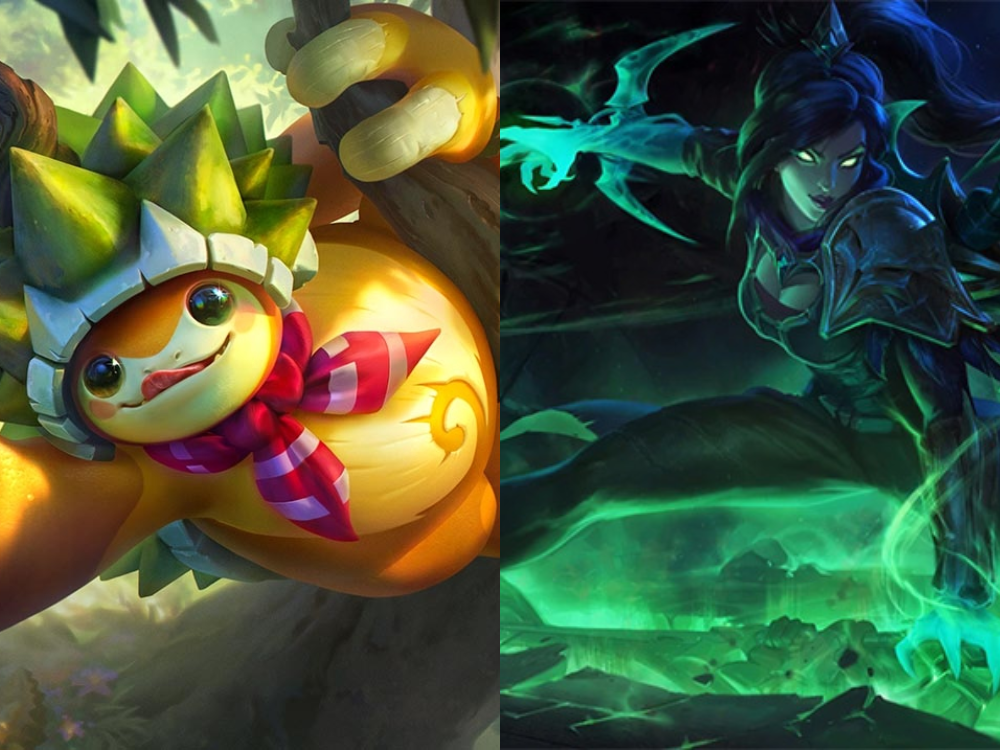
To put it cleanly, counterpicking is the act of picking a Champion whose kit directly goes against that of an enemy Champion, most often the person you’re fighting directly in lane. For example, if you see that the enemy Support player is choosing to play a tank, choosing a character like Brand (who can deal max % health damage easily) or Senna (who is able to consistently deal damage from afar without using too many resources). Picking another tank support might not be a bad idea, but you could possibly set them back more if you try to shut them down.
On paper, counterpicking might seem like the best thing to do if it would make your opponent’s life harder. The biggest glaring issue that you’ll run into is that you probably don’t play every Champion. You could try to learn every character in the game at your rank level, but the amount of time required to get everyone comfortable enough to prepare for any potential lane opponent would be a serious job. Another big hurdle is that you can’t always be sure you’ll be able to pick following your opponent. If your team won the coinflip for first pick, it would be impossible to guarantee a counterpick for your team. The team who loses out on first pick will always get the final pick.
Especially if you’re still working on climbing out of the lower-mid ranks, where team composition is generally regarded as less important, you should try to play more for comfort than counterpick. If you are worried about your lane getting counterpicked, take some time to practice secondary picks to cover your main’s weaknesses. Branch out a little bit in some unranked matches to help you find an AP pick for when the opponent chooses Rammus, or maybe someone with some hard crowd control if you can’t stand to see a Morgana Q flying your way. Stick to what you find comfortable, but make sure to take time to try and round out your gameplay to cover your weaknesses; you’ll never know when you need it!
There are very few Champions who can only play in specific roles. Even though many Champions focus their kit on being in a particular lane, there will always be exceptions. Vayne is normally found down in Bot Lane, but there is always a chance you’ll see her in Top. Anivia is mainly a Mid Laner, but there have been patches where Anivia APC (Bot) has been powerful to the point of being S-tier.
Counterpicking is also not a guaranteed win by any means. It may make winning a little bit easier than if you were playing an average matchup, but it’s important to know that the vast majority of counterpicks only affect the chance of winning or losing by about 10% in most cases. While the advantage is more than minimal, you’re probably only going to be playing a 60/40 matchup at best… and the rest of both teams still need to be taken into account.
As the old saying goes, “Top Lane is an Island” according to many players. While they are far from the only players who deal mostly in a 1v1 throughout the game, there tends to be a lot less outside influence from junglers, opposing laners, and objective priority in their realm. Mid Laners that play into losing matchups are likely going to get a lot of help from their junglers. Top Laners playing a losing matchup are usually left to farm under their turret, unless the jungler goes out of their way to help them. With all this in mind, Top Laners are often seen as left to their own defenses far more often than the other roles, and much more affected by a sheer Champion gap. Other lanes have duos or more gank path options, leading them to help more often.
If you’re playing a role that is less volatile, offering some flexibility can help get your team moving in the right direction. While you don’t have to give your Top Laner the last pick on your team, it is generally viewed as the polite thing to do unless you have your own reasons for keeping last pick for yourself. Communicating with your allies in the pre-game lobby can help avoid tilt before the match even starts.
Counterpicking is the act of trying to choose a Champion that directly contradicts or prevents your lane opponent’s gameplan. You can get a long way by knowing what Champions’ kit strengths and weaknesses are. Exploiting them can give you the upper hand, but it’s important to be able to pilot the Champions you’re choosing effectively. By knowing your Champion well enough, a counterpick is far from a death sentence. Whether you choose to be willing to play against it though is another story. Take some time to think about what your character lacks, and where you can get ahead of your enemies before your next match. Happy queueing!